Full Coverage Auto Insurance in Texas
Full coverage is not a policy type. What the combination usually includes in Texas, when it is worth carrying, and when it is not.
Aulona Insurance Group is an independent insurance agency licensed in Texas (Agency License #3481412) with an office in Plano. Luka Cenaj, a licensed Texas agent, is the reviewer of record for every coverage page on this site.
Texas Agency License #3481412 · NPN 22184980 · English & Albanian
On this page7 sections
- 1What full coverage means on a Texas auto policy
- 2What full coverage still does not pay for
- 3When a Texas lender requires comprehensive and collision
- 4How the deductible works on a Texas auto policy
- 5What Aulona Insurance Group can place
- 6Where Aulona Insurance Group is not the right fit
- 7What moves the price of a full coverage auto policy in Texas
What full coverage means on a Texas auto policy
Full coverage is a shorthand drivers and lenders use, not a legal term and not a product. No Texas statute defines it, and the phrase appears nowhere on a declarations page.
What drivers mean by full coverage is three coverages bought together:
- Liability, which pays other people for injuries and property damage the driver causes
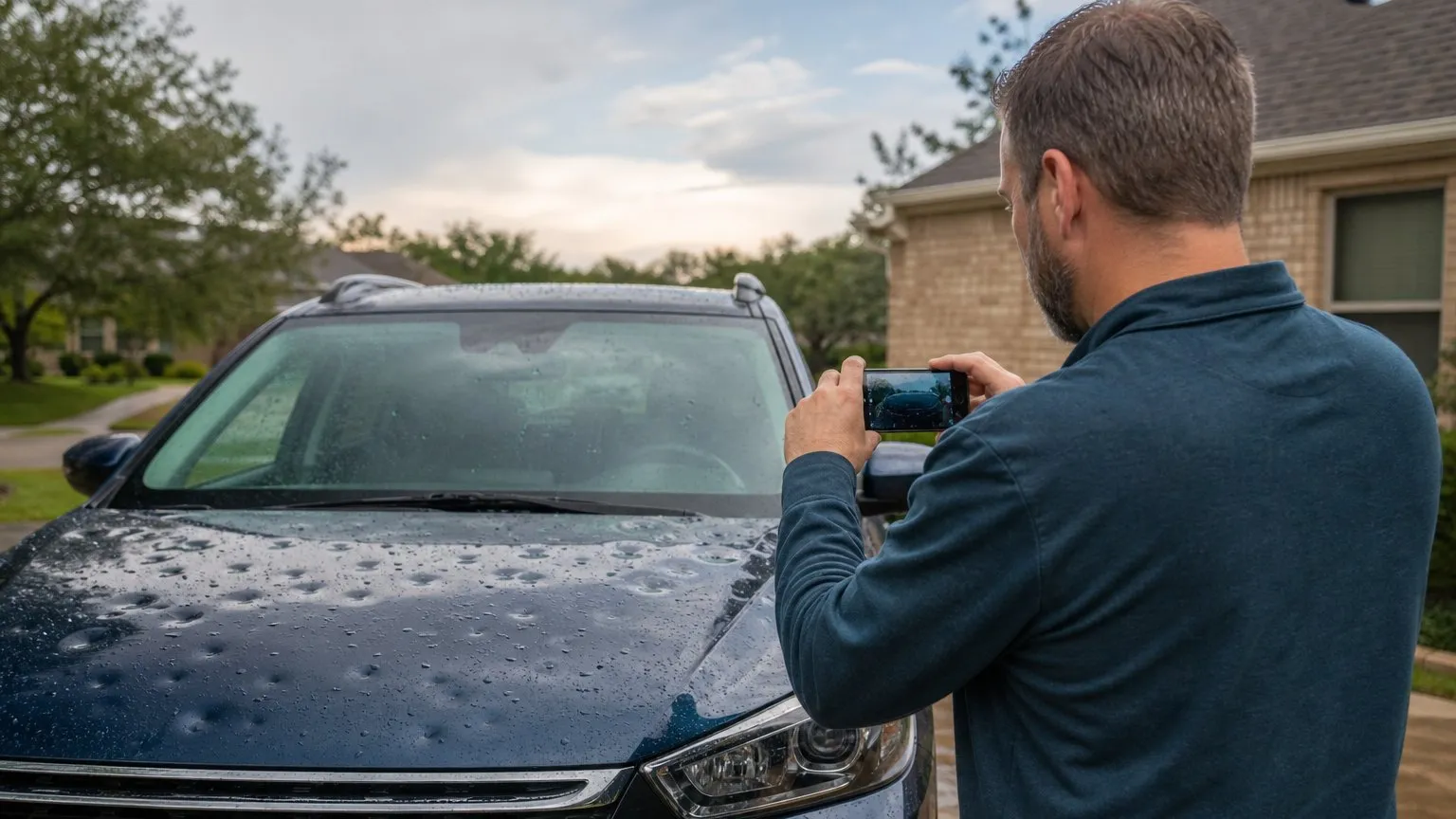
- Comprehensive, which pays for damage to the driver’s own vehicle from hail, theft, fire, flood, vandalism, and animal strikes
- Collision, which pays for damage to the driver’s own vehicle from hitting another vehicle or an object
Texas requires only the first one. Texas Transportation Code §601.072 sets the liability minimum at 30/60/25: $30,000 for injury to one person, $60,000 for injuries in one accident, $25,000 for damage to another person’s property.
What full coverage still does not pay for
Comprehensive and collision cover physical damage to a car, which leaves several common bills sitting with the owner.
Not paid by a full coverage auto policy in Texas:
- Mechanical breakdown, wear, and the transmission that simply gave out
- The gap between a loan balance and the vehicle’s actual cash value after a total loss, unless gap coverage was bought separately
- Medical bills for the driver and passengers, which is what personal injury protection (PIP) is for
- A crash caused by a driver with no coverage, which is what uninsured and underinsured motorist coverage is for
Texas Insurance Code §1952.152 and §1952.101 require every insurer to offer personal injury protection (PIP) and uninsured motorist coverage. A driver may reject either, but only in writing.
When a Texas lender requires comprehensive and collision
A lienholder requires comprehensive and collision because the lender owns an interest in the car until the loan is paid. The requirement comes from the loan or lease contract rather than from Texas law, which asks only for liability.
Three things the loan contract usually demands:
- Comprehensive and collision carried for the life of the loan
- The lender listed on the policy as loss payee, so a claim payment is written to both parties
- A maximum deductible, often capped by the contract rather than chosen by the driver
A lapse in that coverage gives the lender the right to buy its own policy and bill the borrower for it. Force-placed coverage protects the lender’s interest and nothing of the borrower’s.
Once the loan is paid, dropping comprehensive and collision becomes the owner’s decision.
How the deductible works on a Texas auto policy
A deductible is the amount subtracted from a physical damage payment, applied per claim rather than per year.
Mechanics worth knowing before a claim:
- Comprehensive and collision each carry their own deductible, and the two are often set at different amounts
- Liability carries no deductible, because liability pays other people
- A higher deductible lowers the premium and moves that part of every future loss back onto the driver
Hail is where that trade bites in North Texas. A hail claim on a sedan can fall close to the deductible, which leaves an owner paying most of the repair on a policy they have carried for years.
Set the deductible at an amount you could write a check for today, not at the number that prices best.
What Aulona Insurance Group can place
Aulona Insurance Group places personal auto policies with comprehensive and collision across Texas, for standard risk and for non-standard risk.
Aulona Insurance Group can place:
- Vehicles owned outright, financed, or leased, with a lienholder listed
- Commute, personal, and recreational use
- Drivers with tickets, at-fault accidents, or a lapse, on a non-standard policy
- Drivers who need an SR-22 filing alongside comprehensive and collision
Luka Cenaj, the agency’s licensed principal, goes through the deductibles and the lienholder requirement with the driver on a recorded call before anything is bound. A policy written without the lender’s required deductible gets rejected by the lender, not by the insurer.
Where Aulona Insurance Group is not the right fit
Aulona Insurance Group cannot place comprehensive and collision on every Texas vehicle, and the limits here are about valuing the vehicle rather than rating the driver.
Outside the markets Aulona Insurance Group holds:
- Vehicles at a manufacturer’s suggested retail price of $150,000 or more
- Vehicles built before 1981, and those without a seventeen-digit VIN
- Gap-only and storage-only policies, which drivers sometimes ask for as full coverage and are neither
- Non-owner policies, except a non-owner SR-22 for a listed driver
A physical damage claim is settled against the vehicle’s actual cash value, so an insurer has to identify the vehicle and price its repair first.
Recreational vehicles and post office box garaging are the rest of the list, on the Texas auto insurance hub.
A vehicle used for business, or titled to an LLC, corporation, partnership or trust, is not written on a personal auto policy. Aulona Insurance Group places it as commercial auto instead. See Commercial Auto Insurance in Texas.
What moves the price of a full coverage auto policy in Texas
The premium on a Texas auto policy is set by the insurer, not by Aulona Insurance Group.
Comprehensive and collision bring the vehicle itself into the rating, on top of everything that already rated the liability part:
- Repair and replacement cost for that year, make, model and trim
- The deductible chosen on each of the two coverages, set separately
- The driving record, which rates the liability part exactly as it did before
- The garaging county, meaning where the vehicle is parked overnight, which fixes the rating territory
Garaging carries more weight once physical damage sits on the policy, because hail in North Texas and the Panhandle and theft in Houston are comprehensive losses rather than liability losses.
Aulona Insurance Group publishes no premium on this site and does not rank insurers by price. The number comes from the insurer, on the call.
What happens when you contact us
Form, call, placement. No pricing is shown before a licensed agent has spoken with you.
Answer eight questions
About two minutes. We text a code to confirm your number, so we reach the right person.
A licensed agent calls you
Luka goes through coverage and your situation. No pricing is shown before that call.
Coverage gets placed
We go to the markets we hold appointments with and tell you plainly if we are not the right fit.
This page covers one part of Texas Auto Insurance.
Related
