Flood Insurance in Texas
Home policies do not cover flood. How Texas flood coverage works, what the waiting period means, and who needs it outside a mapped zone.
Aulona Insurance Group is an independent insurance agency licensed in Texas (Agency License #3481412) with an office in Plano. Luka Cenaj, a licensed Texas agent, is the reviewer of record for every coverage page on this site.
Texas Agency License #3481412 · NPN 22184980 · English & Albanian
On this page8 sections
- 1What flood insurance covers in Texas
- 2Why a Texas homeowners policy never pays for flood
- 3The 30-day waiting period on a new NFIP policy
- 4FEMA flood zones and who has to carry the coverage
- 5What Aulona Insurance Group can place
- 6Where Aulona Insurance Group is not the right fit
- 7What moves the price of a Texas flood policy
- 8What to have ready before you ask an agent
What flood insurance covers in Texas
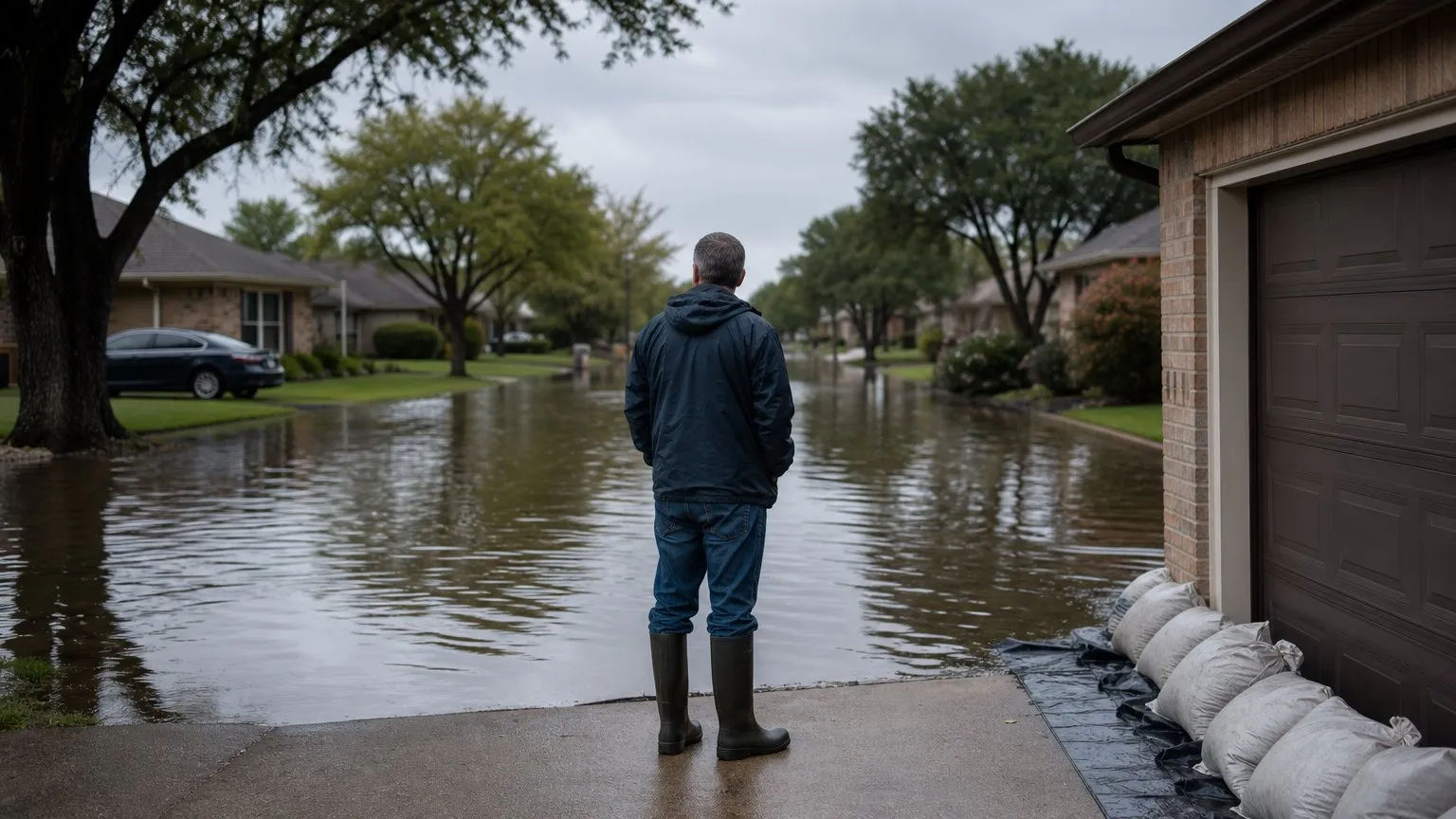
Flood insurance covers damage from water that rises onto ground that is normally dry: storm surge, a creek or river out of its banks, and runoff with nowhere left to go.
The National Flood Insurance Program (NFIP), run by FEMA, defines a flood as water covering two or more acres of normally dry land or affecting two or more properties. Water that comes from inside the house is a different claim entirely.
An NFIP policy sells coverage in two parts, and an owner can buy one without the other:
- Building coverage for the structure, the foundation, the electrical and plumbing systems, the furnace, and built-in appliances
- Contents coverage for furniture, clothing, electronics, and other personal property
Basements and enclosures below the lowest elevated floor get restricted coverage on the building side and very little on the contents side.
Why a Texas homeowners policy never pays for flood
Every Texas homeowners policy excludes flood, which is why the coverage exists as a separate contract rather than as an endorsement.
The line insurers draw is direction of travel. Water falling from the sky or escaping a pipe inside the house is a homeowners claim; water rising from outside and coming in at ground level is a flood claim.
Three water losses, three different contracts:
- A pipe bursting in a wall, paid by the homeowners policy as sudden and accidental discharge of water
- Rain entering through a hole the wind tore in the roof, paid by the homeowners or windstorm policy
- Street water, bayou water, or surge coming under the door, paid only by a flood policy
Sewer and drain backup is a fourth case, handled by a homeowners endorsement rather than by either of those.
The 30-day waiting period on a new NFIP policy
A new NFIP policy does not take effect for 30 days from the date it is purchased, under FEMA’s program rules.
The waiting period is why flood coverage cannot be bought off a forecast. A tropical system in the Gulf is already too late, and so is the morning a stalled front parks over the county.
FEMA waives the 30-day wait in a small number of situations, including:
- A policy bought in connection with making, increasing, extending, or renewing a mortgage loan takes effect at closing
- A policy bought within the window FEMA allows after a flood map revision puts the property into a higher-risk zone
Texas homeowners who want the coverage in force for hurricane season buy it in spring, not in August.
FEMA flood zones and who has to carry the coverage
FEMA flood maps sort every Texas address into a zone, and the zone decides whether flood insurance is a requirement or a decision.
A Special Flood Hazard Area is any zone beginning with A or V. A federally backed or federally regulated mortgage on a property inside a Special Flood Hazard Area carries a flood insurance requirement from the lender.
Zone X and the other moderate and low-risk zones carry no requirement, and flood coverage is still sold there. The Texas Water Development Board’s state flood planning work maps flood risk at a level the older FEMA panels do not always reflect, and Texas homes flood outside mapped high-risk zones every year.
The question of whether the coverage is worth buying without a mandate is answered on Do I Need Flood Insurance?.
What Aulona Insurance Group can place
Aulona Insurance Group places flood coverage through the National Flood Insurance Program and through Write Your Own carriers, which write NFIP policies under their own paper.
Aulona Insurance Group places flood on:
- Owner-occupied Texas homes, inland and on the coast
- Condo units, including ground-floor units where the association master policy leaves a gap
- Rental property written on a landlord or dwelling fire policy
- Seasonal and secondary homes
Flood usually gets placed alongside the property policy rather than on its own, because the two contracts have to be read together to find the gap between them.
Luka Cenaj, the agency’s licensed principal, goes through the zone, the elevation, and the waiting period on a recorded call before anything is bound.
Where Aulona Insurance Group is not the right fit
Aulona Insurance Group cannot place every flood risk, and an owner with a closing date should know which ones fall outside.
Outside what Aulona Insurance Group places on flood:
- Excess flood limits above what the National Flood Insurance Program writes, which sit in the surplus lines market the agency cannot place in-house
- Flood coverage on property outside Texas, because the agency holds a Texas license and places Texas risks only
Aulona Insurance Group also does not draw flood maps or issue elevation certificates. FEMA publishes the maps, and a licensed surveyor produces the certificate, so both documents exist before an agent is involved.
What moves the price of a Texas flood policy
The premium on an NFIP flood policy is set under FEMA’s Risk Rating 2.0 methodology, not by Aulona Insurance Group.
The NFIP rating draws on:
- Distance from the nearest flooding source, whether that is the Gulf, a river, or a drainage channel
- The elevation of the lowest floor relative to the ground and to flood height
- Foundation type, including slab, pier and beam, crawlspace, or an enclosure below the elevated floor
- The cost to rebuild the structure
- The building and contents limits chosen, and the deductible on each
- Prior flood claims paid on the address
Aulona Insurance Group publishes no premium on this site and does not rank insurers by price.
What to have ready before you ask an agent
A flood file needs facts about the ground under the house, which is the part a homeowner has rarely had to look up.
Have these ready:
- The full address and the year the house was built
- Foundation type, and whether there is a basement, crawlspace, or enclosed area below the living floor
- The elevation certificate, if one was ever issued for the property
- The current homeowners or dwelling declarations page
- Whether a lender has sent a flood insurance requirement letter, and the deadline on it
- Any prior flood loss at the address, with the year
The call runs on (945) 600-6008, in English or Albanian, and the lender’s deadline is the date the rest of the file has to fit inside.
What happens when you contact us
Callback, call, placement. No pricing is shown before a licensed agent has spoken with you.
Request a callback
Leave a number and a good time on the contact page, or call the agency directly. We text a code to confirm your number.
A licensed agent calls you
Luka goes through coverage and your situation. No pricing is shown before that call.
Coverage gets placed
We go to the markets we hold appointments with and tell you plainly if we are not the right fit.
This page covers one part of Texas Home Insurance.
Related
