Comprehensive vs Collision Coverage
Collision covers a crash. Comprehensive covers hail, theft, fire and animals. Which claims fall under which, with Texas examples.

Aulona Insurance Group is an independent insurance agency licensed in Texas (Agency License #3481412) with an office in Plano. Luka Cenaj, a licensed Texas agent, is the reviewer of record for every coverage page on this site.
Texas Agency License #3481412 · NPN 22184980 · English & Albanian
On this page7 sections
Collision covers impact, comprehensive covers the rest
Comprehensive and collision are two separate coverages on a Texas auto policy, and each one answers a different kind of damage to your own vehicle. Collision pays when your car hits something or something hits your car. Comprehensive pays for nearly everything else that damages it: hail, theft, fire, flood, vandalism, falling branches, and animal strikes.
Neither coverage is required by Texas law. A lender requires both for as long as you owe money on the vehicle, and the two together are what people mean when they say full coverage.
Both carry their own deductible, and the two deductibles are usually written at different amounts because the two risks behave differently. Neither one pays a dollar toward injuries, yours or anyone else’s.
How the two coverages divide a loss
Your own vehicle damage runs through one of the two coverages, and which one depends entirely on what caused the damage rather than on who was to blame.
Collision responds to impact. Your policy pays your repair whether you caused the crash or not and subtracts your collision deductible, and recovery from the at-fault driver’s insurer runs between the two insurers afterward.
Comprehensive responds to everything that happens to a parked or moving car that is not an impact with another vehicle or object. Fault plays no part at all, because there is usually nobody to blame for a hailstorm.
Both settle the same way on a total loss. The insurer prices the vehicle at actual cash value, subtracts the deductible, and pays you and the lienholder.
A claim on either coverage sits on your record for years, which is the reason small claims are often worth paying yourself.
When one loss touches both coverages
A single incident can run through both coverages when two separate things damage the vehicle. Swerving for a deer and then hitting a fence is the standard example, because the animal strike is comprehensive and the fence impact is collision.
Three mechanics decide how that claim settles:
- The adjuster splits the estimate by damage pattern and by the police report, not by the order you describe the events in
- A deductible can apply on each side, because each coverage settles on its own paperwork
- Injuries to anyone in the vehicle stay outside both coverages, which is where personal injury protection sits, and Texas Insurance Code §1952.152 makes every Texas auto insurer offer it
The Texas version
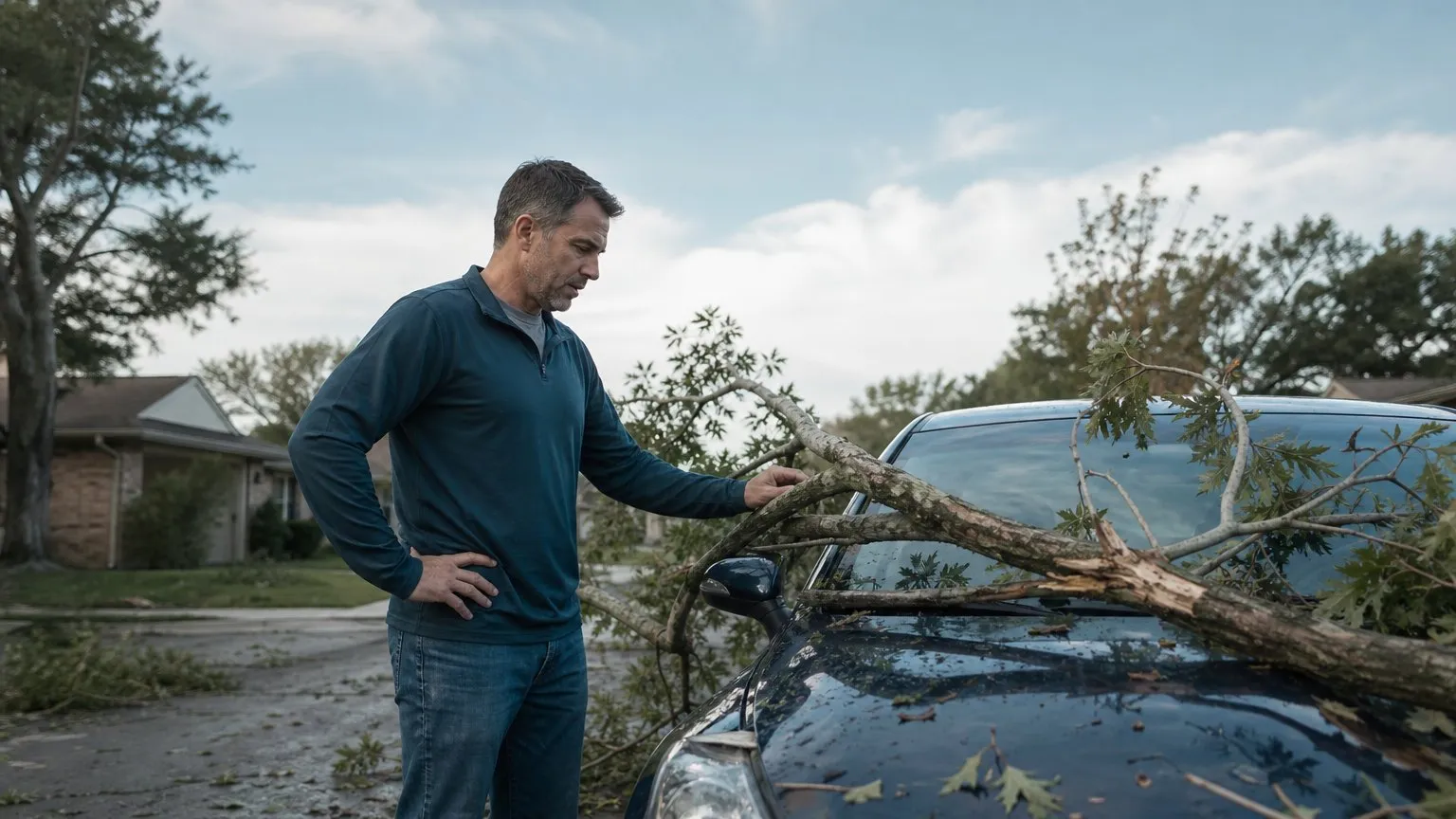
Texas is a hail state, which is why comprehensive gets so much use here. One storm across North Texas or the Panhandle can dent every vehicle parked outside on a street, and each of those is a comprehensive claim.
Glass is the second thing to read closely on a Texas policy. An auto policy sets its own terms for a windshield, and some forms reduce or waive the comprehensive deductible on a repair while others apply it in full, so the declarations page and any glass endorsement decide the question rather than a statewide rule.
Neither coverage satisfies the Texas financial responsibility law. Texas Transportation Code §601.072 requires liability limits only, so a driver can carry comprehensive and collision and still be uninsured in the eyes of the state if liability lapses.
Aulona Insurance Group places the coverage this question is about: Full Coverage Auto Insurance in Texas.
What each coverage pays for
Claims sort cleanly between the two coverages once you know the rule.
| Claim | Collision | Comprehensive |
|---|---|---|
| Hit another vehicle | Pays | No |
| Hit a pole, wall, or guardrail | Pays | No |
| Rolled the vehicle, nobody else involved | Pays | No |
| Hail dents the hood and roof | No | Pays |
| Vehicle stolen | No | Pays |
| Tree limb falls on the vehicle | No | Pays |
| Deer strike on a farm road | No | Pays |
| Fire, flood, or vandalism | No | Pays |
| Cracked windshield | No | Pays, on the policy’s own glass terms |
| Injuries to you or a passenger | No | No |
Cause of loss is the only question that sorts the table. A dented hood from hail and a dented hood from a guardrail are the same repair under two different coverages, and the deductible that comes off is whichever one the cause selects.
Which coverage fits which vehicle
Fit depends on the vehicle and on the lender rather than on which coverage sounds better. Each case below answers a different question about what one loss would cost the household:
- Financed or leased vehicle: both, because the lender requires both
- Paid-off vehicle parked outside in hail country: comprehensive earns its place first
- Paid-off older vehicle worth less than a couple of repairs: the answer turns on what replacing it would cost you, which is a conversation, not a rule
- Vehicle driven under an SR-22: neither is required by the filing, which proves liability only
Neither coverage is required by Texas law. Collision and comprehensive answer to a lender and to a household budget, and liability is the only part of the policy the state insists on.
What to have ready before you ask an agent
Start with the declarations page. It already answers half the question, because current limits, current deductibles, and whether each coverage is even on the policy are all printed there.
Bring these to the call:
- The declarations page for the current auto policy
- Year, make, model, trim, mileage, and seventeen-digit VIN for each vehicle
- Whether each vehicle is owned outright, financed, or leased, and the lienholder’s name
- Where each vehicle parks overnight, including whether it sits in a garage, a carport, or open air
- Any comprehensive or collision claim in the past five years, with dates
Say whether the vehicle sleeps under cover. Aulona Insurance Group asks about hail exposure on every Texas auto call, because an open driveway in Collin County and a closed garage two streets over are not the same risk, and the answer changes the comprehensive side of the policy.
What happens when you contact us
Callback, call, placement. No pricing is shown before a licensed agent has spoken with you.
Request a callback
Leave a number and a good time on the contact page, or call the agency directly. We text a code to confirm your number.
A licensed agent calls you
Luka goes through coverage and your situation. No pricing is shown before that call.
Coverage gets placed
We go to the markets we hold appointments with and tell you plainly if we are not the right fit.
Related
