How to File an Insurance Claim
What to do in the first hour, what to document, what your adjuster will ask for, and where an independent agent helps.

Aulona Insurance Group is an independent insurance agency licensed in Texas (Agency License #3481412) with an office in Plano. Luka Cenaj, a licensed Texas agent, is the reviewer of record for every coverage page on this site.
Texas Agency License #3481412 · NPN 22184980 · English & Albanian
On this page9 sections
- 1A claim opens in four moves
- 2What you need before you start
- 3Step 1: Make the scene safe and get the official report started
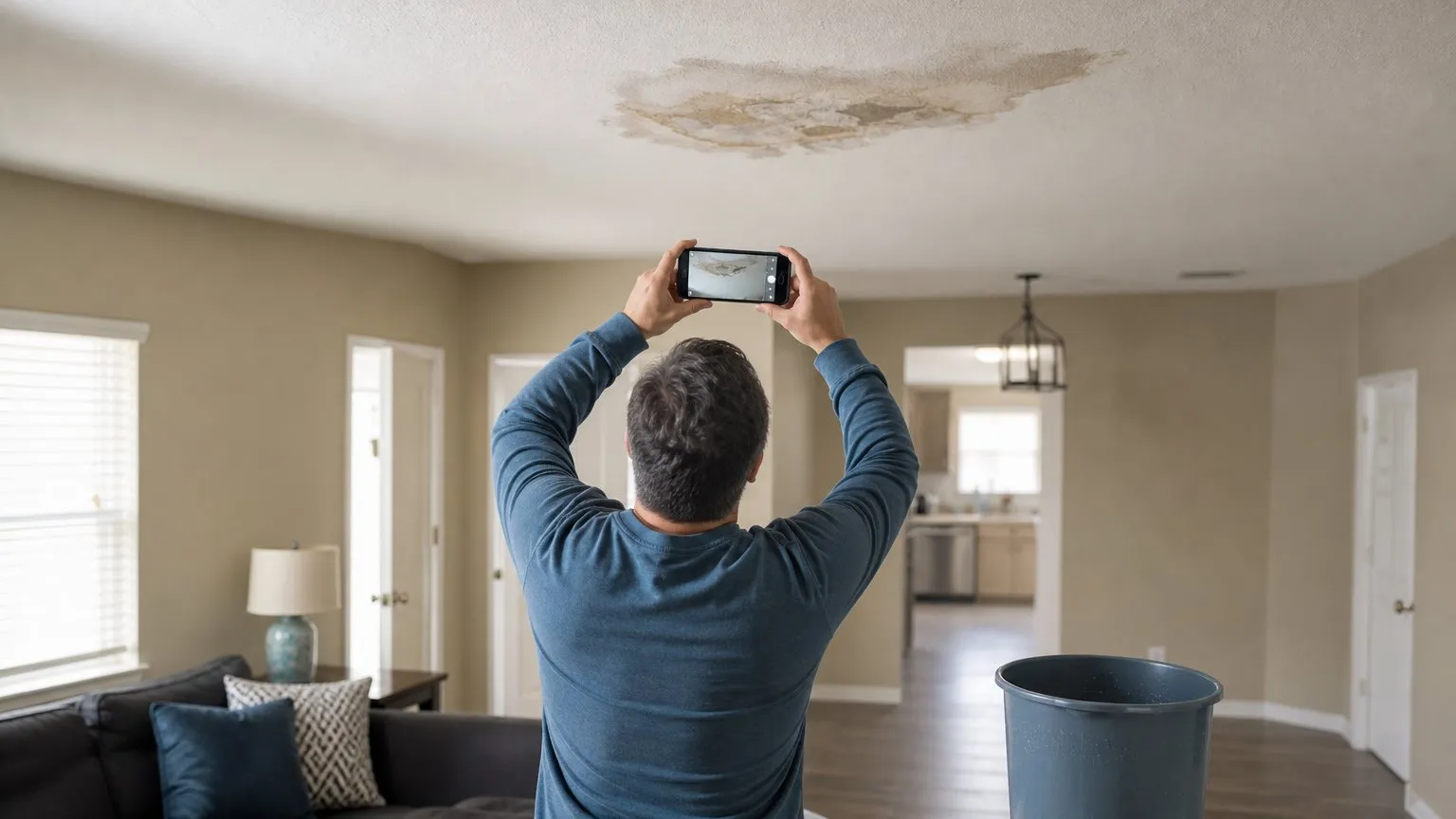
- 4Step 2: Photograph the damage before anything is moved
- 5Step 3: Report the loss and write down the claim number
- 6Step 4: Send the proof of loss and keep your own copy
- 7The Texas version
- 8What the adjuster asks for, by type of claim
- 9What to have ready before you ask an agent
A claim opens in four moves
Filing an insurance claim is four moves in order: make the scene safe, document the damage before anything is moved or repaired, report the loss to the insurer, then send the proof of loss the adjuster asks for.
Report the loss even when the other driver promises to pay. A policy requires prompt notice, and a claim reported late is harder to investigate.
Your deductible comes out of the settlement itself. An adjuster prices the loss, subtracts the deductible printed on your declarations page, then pays the difference up to the coverage limit.
Nothing in the four moves requires an agent. A policyholder can open a claim directly on the insurer’s claims line, and the agent’s job afterwards is to follow the file rather than to decide it.
What you need before you start
Claims move at the speed of the file, and the file is built in the first hour after the loss. Everything below is easier to collect at the scene than a week later.
Have these details written down before calling:
- The policy number and the declarations page for the policy you are claiming on
- The date, time, and street address of the loss
- The other driver’s name, license plate, insurer, and policy number, if a vehicle is involved
- The police report or incident number, if an officer came out
- Photographs taken before anything was towed, tarped, or repaired
Photographs are the one item nobody can recreate later. A tarp goes on, a vehicle gets towed, and the condition the adjuster needs to see is gone.
Step 1: Make the scene safe and get the official report started
Move people out of traffic, call 911 if anyone is hurt, and let the officer make the report. Texas Transportation Code §550.026 requires a driver to report a crash involving injury, death, or a vehicle that cannot be driven away from the scene.
Stop the damage from spreading on a property loss. Shut the water off, tarp the roof, and keep people out of a structure that is not safe, because every homeowners policy makes the owner responsible for protecting the property after a loss.
Keep the receipts for the tow, the tarp, the plumber, and the hotel. Emergency expenses are often reimbursable, and a receipt is the only version of that expense an adjuster can pay.
Step 2: Photograph the damage before anything is moved
Photograph everything twice, once wide and once close. An adjuster who never sees the damage works from an estimate written by someone else, and the photographs are what tie that estimate to the loss.
Capture these:
- The whole vehicle from four corners, then each damaged panel close up
- The other vehicle, both license plates, the intersection, and the road conditions
- The damaged room or roof slope, and the undamaged rooms the water reached
- Serial and model numbers on anything stolen or destroyed
Keep the damaged property. A ruined mattress or a hail-struck shingle is the item an adjuster inspects, and discarding it before the claim closes removes the proof.
Step 3: Report the loss and write down the claim number
Call the insurer’s claim line and open the claim yourself. An agent can report a loss, and the claim still belongs to the insurer, so the first-hand account is the one the adjuster works from.
Write down four things on that call:
- The claim number
- The adjuster’s name, direct number, and email
- What the insurer asked you to send, and by when
- Whether the insurer wants a recorded statement, and when it is scheduled
Answer what happened and skip what you assume. A recorded statement is a record of what you knew, not a place to guess at speeds or at the condition of a roof you have never been on.
Step 4: Send the proof of loss and keep your own copy
Send the proof of loss with every document the insurer requested, and keep a dated copy of what you sent. The clock the insurer works under does not start until it has what it asked for.
Include the estimate, the receipts, the photographs, and the inventory of anything stolen. A written estimate from a contractor or a body shop carries more weight than a figure quoted over the phone.
Keep your own claim log. One page with dates, names and what was said gives you the documented timeline the insurer, the adjuster and the Texas Department of Insurance all work from.
The Texas version
Texas puts the insurer on a clock once a claim is reported. Texas Insurance Code §542.055 requires an insurer to acknowledge the claim and request what it needs within 15 days, §542.056 requires acceptance or rejection within 15 business days of receiving everything it asked for, and §542.057 requires payment within five business days of the acceptance notice.
Texas extends those deadlines in a weather catastrophe declared by the insurance commissioner, and an insurer that cannot finish an investigation may extend in writing with its reasons stated.
The Texas Department of Insurance takes complaints about claim handling at 1-800-252-3439 and at tdi.texas.gov, and a complaint is answered faster with the claim number and the dates already assembled.
Aulona Insurance Group places the coverage this question is about: Texas Auto Insurance.
What the adjuster asks for, by type of claim
Every claim runs the same four moves, and the documents change with what was damaged.
| Claim | What the adjuster asks for | Deductible |
|---|---|---|
| Auto collision | Photos, the police report number, a shop estimate, a recorded statement | The collision deductible |
| Auto comprehensive | Photos, the theft or fire report, a shop or glass estimate | The comprehensive deductible |
| Auto liability against you | The other party’s claim, your statement, the police report | None |
| Total loss on a vehicle | Title, lienholder payoff, both keys, personal property removed | Taken off the actual cash value |
| Homeowners wind or hail | Roof age, photos of every slope, a contractor estimate | The wind and hail deductible |
| Homeowners water | Photos, the plumber’s invoice, the source of the leak | All other perils |
| Theft from a home | The police report, receipts or photos, serial numbers | All other perils |
A claim below the deductible pays nothing and still sits on the record.
What to have ready before you ask an agent
Bring the claim number to the call, not the story. An agent works a file from the claim number, the adjuster’s name and the dates.
Add these to the claim number:
- The declarations page for the policy the claim is on
- The date the loss happened and the date you reported it
- Everything the insurer has asked for, and what you have already sent
- The written estimate, if a shop or contractor has produced one
Luka Cenaj is the licensed agent on the account at Aulona Insurance Group. An agent’s job on a claim is to follow the file with the insurer, and the insurer decides the claim.
What happens when you contact us
Callback, call, placement. No pricing is shown before a licensed agent has spoken with you.
Request a callback
Leave a number and a good time on the contact page, or call the agency directly. We text a code to confirm your number.
A licensed agent calls you
Luka goes through coverage and your situation. No pricing is shown before that call.
Coverage gets placed
We go to the markets we hold appointments with and tell you plainly if we are not the right fit.
